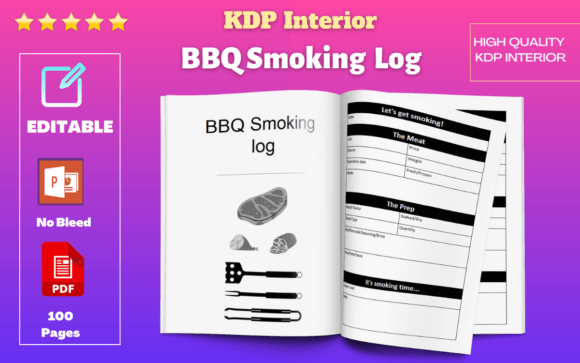
KDP Interior: BBQ Smoking Log for Pitmasters
For the graphic designer or creative entrepreneur, a well-structured template is the foundation of an efficient workflow and a polished final product. The KDP Interior - BBQ Smoking Log is a prime example of a specialized creative asset that serves a specific niche with high-quality, adaptable design. This 100-page, 6"x9" interior is not just a logbook; it's a versatile starting point for creating branded merchandise, digital products, or marketing materials for the culinary and outdoor lifestyle sector.
From a visual design perspective, the value of such an asset lies in its pre-built structure and professional execution. The no-bleed, resized vector files in both PowerPoint and PDF formats provide immense flexibility. A designer can quickly customize the typography, color palette, and layout to align with a client's brand identity, transforming a generic template into a cohesive part of a larger brand system. This is a practical application of design workflow optimization, saving hours of layout time while ensuring a high-resolution, print-ready result.
Practical Applications Across Creative Projects
The utility of a specialized interior like this extends far beyond its initial purpose as a simple logbook. It can be integrated into numerous creative projects, enhancing both digital and print design outcomes.
- Brand Identity & Merchandise: Use the template as the interior for a branded journal or notebook, a perfect companion product for a BBQ sauce brand, a butcher shop, or a culinary school. This strengthens brand identity through consistent, useful packaging design and editorial layouts.
- Digital Marketing & Social Media: Adapt the clean interior pages into social media graphics or lead magnets. A well-designed "Smoking Tracker" page can be offered as a free download, driving engagement and growing an email list for a food blog or related business.
- Editorial & Web Design: The structured grid and typographic hierarchy within the log can inspire layouts for food magazines, recipe websites, or UI design for a cooking app. The clarity of its visual communication is a model for user experience (UX) in content-heavy applications.
Evaluating and Customizing Design Assets
When integrating any creative asset, a critical eye ensures it enhances rather than detracts from your project's quality. Here are key factors to consider:
- Consistency & Scalability: Check that the design elements—fonts, icons, and spacing—are consistent throughout. Vector-based assets are superior as they scale perfectly for any application, from a small web graphic to a large print poster.
- Visual Hierarchy & Readability: Assess the template's inherent visual hierarchy. Is the layout intuitive? Does the typography guide the user's eye naturally? For a logbook, readability is paramount; the design should facilitate easy, at-a-glance note-taking.
- Compatibility & Customization: Ensure the file format (like the provided PowerPoint and PDF) is compatible with your design software. The best assets are those that are easily editable, allowing you to inject your own color palette, imagery, and brand voice without compromising the original structure.
Thoughtful selection and customization of design assets are what separate generic projects from professional, impactful ones. A resource like the KDP Interior - BBQ Smoking Log provides a robust, ready-made foundation. By applying principles of strong graphic design—such as maintaining clear visual hierarchy, ensuring typographic clarity, and aligning with modern aesthetics—you can leverage such templates to produce polished, professional materials. Ultimately, investing in quality creative assets streamlines your process and elevates the final product, ensuring your visual communication is as effective and refined as the craft it represents.