Phone Call Log Book: A Designer's Guide to Efficient KDP Interiors
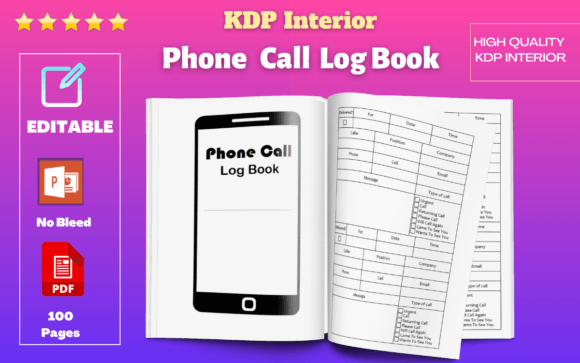
In the fast-paced world of professional communication, a well-designed Phone Call Log Book | KDP Interior is more than just a notebook—it's a critical tool for operational clarity and brand consistency. For graphic designers creating functional printables, or businesses seeking polished organizational assets, the visual design of a log book directly impacts its usability and professional appeal. This template, with its thoughtful layout for receptionists and managers, exemplifies how design principles solve real-world problems.
The Visual Design of Functional Organization
A phone call message log succeeds when its design facilitates quick, error-free note-taking. The inclusion of checkboxes, ample writing space, and a clean 6" x 9" format demonstrates a focus on visual hierarchy and user experience (UX). The typography must be legible, the grid structure logical, and the use of negative space intentional. This isn't just about aesthetics; it's about creating a design workflow that minimizes friction for the user, whether they're jotting down a urgent message or reviewing a day's calls.
Key Design Elements for Effective Log Templates
- Typography & Readability: Choosing a clean, sans-serif font for the body ensures messages are easy to read at a glance. Slight variations in weight can guide the eye from headers to entry fields without visual clutter.
- Structural Grid: A consistent grid aligns checkboxes, date fields, and lines for notes. This invisible structure creates order, making the template feel reliable and professional—a core aspect of strong brand identity.
- Functional White Space: Generous margins and spacing between entries are not empty space; they are breathing room that reduces cognitive load and prevents a cramped, stressful user experience.
Practical Applications Across Creative Projects
The principles behind this Phone Call Log Book extend far beyond a single product. Designers can apply this logic to a multitude of creative assets and projects, enhancing both form and function.
Consider how this template's design philosophy informs other work:
- Marketing & Brand Collateral: The same attention to layout and readability applies to designing intake forms, client worksheets, or branded notepads. Consistency in these touchpoints strengthens brand identity.
- Editorial & Packaging Design: The management of information in a log book mirrors the need for clear visual hierarchy in magazine layouts or product packaging instructions. Both require guiding a user's eye efficiently through content.
- Digital & UI Design: The template's structure is a static precursor to a well-designed digital form or dashboard UI. The fields, labels, and flow translate directly into principles of good user interface (UI) design.
Selecting and Evaluating Design Assets
When choosing or creating assets like a Phone Call Message Log, evaluate them with a designer's critical eye. Does the color palette align with a professional or calming aesthetic? Is the file format—such as an editable PowerPoint or print-ready PDF—compatible with your design workflow or client's needs? High-resolution, vector-based interiors ensure scalability and crisp printing, which is non-negotiable for professional results.
Furthermore, consider the asset's versatility. A well-designed interior can be adapted. You might adjust the color scheme in PowerPoint to match a client's brand identity, or use the grid as a foundation for a custom digital planner. This adaptability multiplies the value of a single creative resource.
Ultimately, the most effective design choices are those that serve a clear purpose while elevating the user's experience. A thoughtfully crafted Phone Call Log Book | KDP Interior does exactly this—it transforms a mundane task into a seamless process through considered graphic design. By prioritizing clarity, usability, and visual polish in these everyday tools, designers and businesses alike can foster greater efficiency, reinforce professionalism, and create a cohesive brand experience at every touchpoint.